


The True Cost of Radon Testing:
Why the BREEZE Program Is Changing the Way Home Inspectors Do Business
A better radon testing program isn’t just about the monitor. It’s about everything that happens before, during, and after the test.
Radon testing has become a standard part of the real estate transaction across much of the United States and Canada. Home inspectors have played an enormous role in making that happen, helping protect homebuyers while building an important additional revenue stream for their businesses. Yet despite how far the industry has come, one question has remained surprisingly unchanged:
Why does running a radon testing program still require so much unnecessary work?
For decades, the typical approach has been straightforward. Purchase a continuous radon monitor, place it in a home, return approximately 48 hours later, retrieve the equipment, download the results, generate a report, and deliver it to the customer. Then, once a year, send the monitor away for calibration, pay the associated fees, and figure out how to keep your testing schedule running while the equipment is gone.
It’s a process that works. But working and operating efficiently are two very different things. When we developed the BREEZE Radon Program, our goal wasn’t simply to build another accurate radon monitor. It was to rethink the entire process of radon testing from the perspective of the home inspector operating the business.
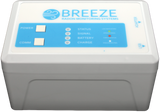
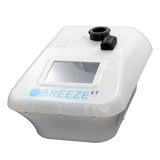
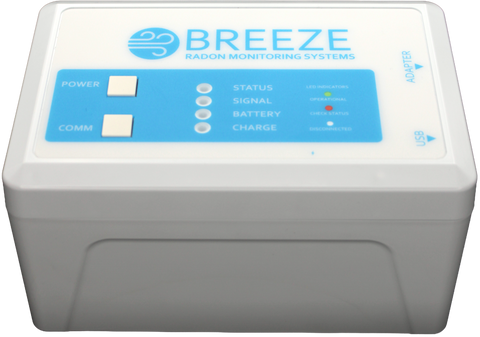
Today, with the BREEZE 4 Continuous Radon Monitor, that vision has evolved into something much more comprehensive.
1The Biggest Expense in Radon Testing Isn’t Necessarily the Equipment
Ask a home inspector what their radon monitor costs, and you’ll probably hear two numbers: the original purchase price and the annual calibration fee. A monitor might cost $800–$1,000 to purchase, followed by $150–$250 in annual calibration expenses, plus another $30–$40 to ship it to and from the calibration facility.
On the surface, that might sound fairly economical. But what about the time spent retrieving results, generating reports, uploading documents, tracking calibration schedules, managing equipment failures, and coordinating testing appointments? What happens when a monitor needs servicing during your busiest month? What does it cost when a completed test sits waiting for an inspector to return to the property before the report can be delivered?
And what happens when your business grows from two monitors to twenty? These expenses don’t always appear on an invoice from your equipment manufacturer. Instead, they show up in payroll, lost productivity, delayed transactions, additional trips, and administrative overhead.
The true cost of a radon testing program is the total cost of operating it, not simply the cost of owning the equipment.
That distinction is the foundation of the BREEZE Program.
2Automated Reporting Changes Everything
One of the most significant inefficiencies with traditional radon monitors has been the process of retrieving and delivering test results. Historically, an inspector needed to physically return to the property, access the monitor, download the data, and then prepare or distribute the report. BREEZE approaches this differently.
The BREEZE 4 features built-in cellular connectivity, allowing test data to be transmitted to the BREEZE platform without requiring the inspector to return to the property simply to retrieve the results. Once a compliant test is completed and finalized, the report is automatically generated and delivered.
No manual downloading. No waiting for someone to pick up the monitor. No additional administrative step just to get the results into your customer’s hands.
Think about what that means for your business. Your inspector can be conducting another home inspection while a radon test finishes across town. Your customer doesn’t need to wait until someone can physically retrieve the monitor. And your administrative team doesn’t have to manually process every report.
Now Let’s Talk About Weekends.
You place a radon monitor on Thursday or Friday. The test is scheduled to finish Saturday or Sunday. What happens with a traditional monitor? You have two choices. You can send an inspector out over the weekend to retrieve the equipment, download the results, and get the report delivered. Or you can wait until Monday, potentially leaving your real estate agents and clients waiting on results that were technically ready days earlier.
And we’ve all been there. It’s Saturday evening. You’re finally sitting down for dinner with your family when your phone lights up.
“Hey, where’s my radon report? The test was supposed to finish today.”
Sound familiar? Now you’re explaining to an agent why the results aren’t available yet, trying to arrange a weekend pickup, or interrupting another inspector’s day off to get the report delivered. Why are we still making inspectors choose between giving up their weekends and keeping their customers waiting?
With BREEZE, that decision disappears for tests that complete successfully and transmit their results. A test finishing Saturday afternoon automatically generates and delivers its report without an inspector returning to the property. Your inspector gets their weekend back. Your agent gets the report. Your client gets the information they need.
And your equipment? You can pick it up when it actually makes sense for your business.
Stop Letting Radon Monitor Pickups Dictate Your Schedule
This is one of the most overlooked advantages of cellular radon testing. With traditional equipment that requires physical data retrieval, the report and the pickup are tied together. You need the results, so you need the equipment. That forces your schedule to revolve around when each test finishes.
BREEZE separates those two activities. Once the test is complete and the report has been delivered, you have substantially more flexibility over when to retrieve the monitor. Imagine you have four monitors finishing tests over the weekend. Instead of sending inspectors all over town Saturday and Sunday, you could schedule a single employee to retrieve those monitors Tuesday morning.
Better yet, that employee doesn’t necessarily need to be one of your highly trained home inspectors. Why pay an inspector’s hourly rate to drive across town collecting equipment when a lower-cost employee could handle the pickups? Or maybe Tuesday morning isn’t the best time. Perhaps an inspection cancels, leaving an unexpected opening in your schedule. Now you can use that gap to retrieve equipment without holding up completed reports.
You can group pickups geographically, reduce unnecessary trips, and organize routes around the needs of your business rather than the moment a radon test happens to finish. That’s route optimization. And it can fundamentally change the economics of operating a radon testing program. Your inspectors should be spending their time performing inspections and generating revenue, not acting as expensive delivery drivers because their equipment requires them to.
For an independent inspector, that flexibility can mean fewer unnecessary trips, more control over the workweek, and more time available for paying appointments. For a larger company, it creates opportunities to centralize equipment retrieval, assign pickups to dedicated personnel, and coordinate multiple monitors across an entire service territory.
The report gets delivered when it’s ready.
The equipment gets retrieved when it’s efficient.
Those two things should never have needed to happen at the same time.
3Industry Integrations: Connecting Radon Testing to Your Scheduling Software
Automated reporting is powerful on its own. But the real opportunity comes when your radon testing equipment communicates directly with the software you already use to operate your inspection business. That’s why BREEZE is continuing to invest in integrations with inspection scheduling and business management platforms.
Our integration with Spectora is one example of this connected approach. For inspectors using the integration, a radon testing appointment created in Spectora flows into the BREEZE platform. The inspector then initiates and manages the test through the BREEZE app. When the test is completed and finalized, the report automatically flows back into the corresponding Spectora inspection.
No unnecessary duplicate appointment entry. No manually downloading the completed report just to upload it somewhere else. The objective is simple: your scheduling software, radon equipment, and reporting platform should work together. And as the BREEZE ecosystem continues to evolve, our focus remains on making these integrations a natural part of the inspection workflow rather than another administrative task.
4Why We Believe Monthly Service Is Better Than Annual Calibration Bills
This is probably the most misunderstood part of the BREEZE Program. A common comparison sounds something like this:
“My current monitor only costs $150 per year to calibrate. Why would I pay $41.50 per month?”
It’s a fair question. But it compares the price of one service with the price of an entire operating program. First, let’s look at what annual calibration actually costs. Depending on the manufacturer and calibration provider, an inspector can expect to pay approximately $150–$250 for calibration, with prices continuing to rise across parts of the industry.
Then there’s shipping. Getting your monitor to the calibration facility and back can add another $30–$40. That brings the direct annual expense to approximately $180–$290 per monitor before accounting for downtime, administrative work, or any repairs. And what exactly does that payment get you? Generally speaking, it gets your monitor calibrated.
It doesn’t automatically get you cellular connectivity, automated reporting, scheduling software integrations, lifetime equipment protection, or a solution to the operational downtime caused by shipping your monitor away. And the cherry on top of this outdated process? You may get to wait another two to three weeks for your equipment to come back.
What happens if your monitor fails calibration? What if the manufacturer identifies a defect, a damaged component, or another issue that needs to be addressed before the monitor can be returned? Now you’re potentially dealing with additional repairs, unexpected expenses, and even more downtime. Meanwhile, your business still needs to perform radon tests.
That’s an awful lot of inconvenience for something that’s supposed to be routine annual maintenance.
BREEZE Takes an Entirely Different Approach
Rather than treating your radon monitor as a standalone piece of equipment that you periodically send away for maintenance, we treat it as part of an ongoing technology and service program. With BREEZE, you don’t need to schedule a calibration appointment, find a provider, or worry about how long your equipment will be unavailable.
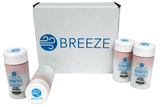
Approximately two weeks before your existing monitor is due for calibration, BREEZE automatically ships you another monitor. You receive an email notification that your replacement is on its way. We track the shipment to ensure it arrives ahead of your calibration deadline. Inside the box is a prepaid return label.
You exchange the monitors and send the original back to us using the provided label. That’s it.
- No searching for a calibration facility.
- No scheduling service.
- No paying to ship your equipment.
- No wondering when your monitor will come back.
- And no monitor sitting out of commission for two or three weeks while you wait for calibration.
Zero scheduled calibration downtime. Zero calibration scheduling burden. Zero out-of-pocket calibration shipping expense.
For a company with twenty monitors, that’s twenty separate annual calibration events you no longer need to independently coordinate. For an independent inspector with just a couple of monitors, it means you don’t have to worry about losing a significant portion of your testing capacity when calibration comes due.
This is a perfect example of why comparing our monthly fee to a traditional calibration invoice misses the point.
Traditional calibration is a service you have to manage. BREEZE calibration is a process we manage for you.
What the BREEZE Subscription Includes
The BREEZE Program brings together:
- Built-in cellular connectivity for automatic data transmission.
- Cloud-based test management, records, and reporting.
- Automatic report generation and delivery.
- Annual calibration through our proactive advance exchange program.
- Zero scheduled calibration downtime.
- Prepaid shipping for calibration exchanges.
- Ongoing software and firmware improvements.
- A no-questions-asked lifetime warranty.
- Access to the BREEZE ecosystem and supported industry integrations.
The BREEZE Advantage: One Simple Monthly Fee
What It Covers:
- Cellular Connectivity: Built-in cellular connectivity with no additional data plans or connectivity fees.
- Zero-Downtime Calibration: Receive a freshly calibrated replacement monitor annually, keeping your fleet fully operational with no additional calibration costs.
- Free Calibration Shipping: All shipping costs associated with annual calibration exchanges are included in your monthly fee.
- Lifetime Warranty: No-questions-asked lifetime warranty to protect your investment.
- Software Platform: Full access to the BREEZE software platform, including remote monitoring, test management, and automated reporting.
- Radon Compliance Support: Assistance with quarterly reporting, Quality Assurance (QA) plans, and other radon regulatory compliance requirements.
Our standard subscription is $41.50 per month per monitor, with a reduced rate of $35 per month for companies operating 10 or more units. That’s $498 annually at the standard rate or $420 annually at the volume rate. Yes, that’s more than a $180–$290 annual calibration and shipping expense. But calibration is only one component of what you’re receiving.
The monthly subscription supports the technology, connectivity, reporting, calibration logistics, and equipment protection that make the entire program more efficient. And instead of dealing with separate annual service invoices and unpredictable repair costs, the monthly model makes it easier to budget for your ongoing radon testing operations.
5A No-Questions-Asked Lifetime Warranty Changes Everything
Let’s talk about something every inspector has experienced, or at least worried about. Equipment gets damaged. How many times has an inspector accidentally dropped a radon monitor? How many monitors have been knocked off a shelf, damaged in a vehicle, or mishandled during a busy workday? And what about theft?
It happens. Equipment gets stolen, misplaced, or disappears from a property. With traditional equipment, those situations can mean an unexpected repair bill or another $800–$1,000 purchase. That’s a significant expense for any inspection business. With BREEZE, we take that unpredictability out of the equation.
Every BREEZE 4 comes with our no-questions-asked lifetime warranty.
Drop your monitor? We replace it.
Equipment gets damaged? We replace it.
Monitor gets stolen? We replace it.
No complicated warranty negotiations. No worrying about whether a repair will cost more than the equipment is worth. We replace the equipment promptly so you can get back to testing. It’s another reason the monthly service model makes sense. Instead of treating equipment failures as unpredictable capital expenses, BREEZE provides an ongoing program designed to keep your testing operation moving.
For an independent inspector, that protection can prevent an unexpected expense from disrupting the business. For a company operating a large fleet, it can make equipment budgeting dramatically more predictable.
Your radon testing equipment should be an asset that generates revenue, not a financial liability you’re constantly worried about replacing.
6Better Technology Means Better Visibility Into Every Test
A modern radon monitor should do more than collect measurements. The BREEZE 4 was designed to give inspectors greater visibility into what’s happening with their equipment and their testing program.
500+ Hours of Battery Life
Battery life shouldn’t be something you constantly worry about. The BREEZE 4 is advertised with 500+ hours of battery life, with internal facility testing approaching 1,000 hours of continuous operation under tested conditions. That means less time charging equipment, fewer interruptions between appointments, and substantially more flexibility in how you manage your fleet.
Built-In Cellular Connectivity
Test data is transmitted automatically when cellular connectivity is available, without requiring a separate phone, a property’s Wi-Fi network, or a manual download.
Environmental and Tamper-Related Monitoring
Temperature, humidity, pressure, and other monitoring capabilities provide additional context that can help inspectors identify conditions requiring attention.
GPS Functionality
Location-related features assist with equipment management and tracking.
Remote Test Visibility
Inspectors can manage their testing activity through the BREEZE platform rather than relying exclusively on physical access to each device.
High-Sensitivity Radon Detection
The BREEZE 4 delivers approximately 55–60 counts per hour per pCi/L, providing exceptionally high sensitivity for professional continuous radon monitoring.
These aren’t features designed simply to look impressive on a specification sheet. They’re tools intended to reduce the operational challenges of running a professional radon testing business.
7How Much Is Your Current Radon Testing Program Actually Costing You?
We’ve spent a lot of time talking about hidden expenses, wasted hours, and unnecessary equipment downtime. But rather than telling you what those costs are for your business, we’d rather let you calculate them yourself. After all, no two inspection companies operate exactly the same way. Maybe you’re an independent inspector completing twenty radon tests a month.
Maybe you manage fifteen inspectors and a fleet of thirty monitors. Maybe your current equipment is relatively inexpensive to maintain. Or maybe your company spends thousands of dollars annually on calibration, shipping, repairs, and administrative work.
The important question is: Have you ever actually calculated the full cost of your radon testing program?
Not just what you paid for the monitors. Not just what the manufacturer charges for calibration. We’re talking about everything.
- How much does it cost to purchase your equipment?
- How much are you paying annually for calibration and shipping?
- How much time do you spend downloading results and preparing reports?
- How much time does your team spend uploading reports into scheduling software?
- What does calibration downtime cost you?
- How much money is tied up in backup equipment?
- What about repairs, replacements, and lost or damaged monitors?
- And how much time are you wasting making trips that could have been scheduled more efficiently?
These are real business expenses, even when they don’t appear as a separate line item on your income statement.
Your radon testing business
Your current equipment costs
Your existing equipment groups
Group monitors by age. The number of monitors in these groups determines your current fleet size. Enter the cost to buy a replacement today, not the historical price you paid.
Provider enrollment, account setup or initial paperwork. Charged once, not per monitor.
Initial handling, fulfillment or delivery charges.
Rentals have no monitor purchase price or expected equipment lifespan. Calibration, shipping and repairs default to $0 because providers often cover them; enter amounts only if billed separately. One-time setup and handling are counted as new costs when starting a rental program. If already paid, set them to $0.
Include expected annual costs per monitor for physical damage, repairs, theft, loss, or replacing a damaged or missing machine. Use a realistic annual average rather than the full replacement price every year.
Already-purchased monitors are sunk costs. We count future replacements only. Rented monitors have ongoing rental expenses instead of equipment purchases.
Your time, productivity & compliance costs
Enter expenses BREEZE can realistically reduce. Estimated labor savings are separate from direct cash expenditures.
Whole-fleet compliance management
State reports, quarterly data gathering, QA plan development and maintenance, recordkeeping and compliance coordination. These costs vary significantly by state. Enter the total time spent for your company, not hours per monitor.
Default: 90% reduction. Change this to match services available and your state's requirements.
Compliance responsibility remains with the licensee or business where required. BREEZE support may reduce administrative effort, not eliminate legal obligations. Don't double-count time already entered elsewhere.
BREEZE purchase and trade-in
$300 credit per eligible existing monitor switched. Not applicable to net-new fleet additions.
Monthly subscription is $41.50/unit for 1–9 active BREEZE units and $35/unit for 10+. This includes cellular service and the supported program benefits.
Planned fleet expansion
Enter when new monitors will be needed. Expansion purchases are modeled at the beginning of the specified month. New BREEZE subscriptions begin when those monitors are added. Expansion test volume increases at your current tests-per-monitor rate.
Your results
Compare cumulative total program costs, with the break-even marker. If you plan to expand, you can optionally isolate the economics of new monitors.
Full economic cost breakdown
Includes equipment and operating expenses plus the estimated value of avoidable labor. This is the same basis used for the results and break-even chart.
| Expense | Traditional | BREEZE |
|---|
How the costs accumulate over time ( years)
How we keep the comparison fair
Existing equipment purchase costs are not charged again. Rental costs are modeled instead of purchases when renting. Rental setup and handling fees are included only when entered; optional return and closeout fees are charged at the comparison horizon only when selected. Rental calibration, shipping and repairs default to zero unless separately billed. Future expansion is purchased in both strategies, but new BREEZE units receive no trade-in credit. Productivity and compliance savings are estimates based on your inputs, not guaranteed reductions in cash spending. Compliance is a company-wide cost; partial transitions receive proportionate benefits in this model. No inflation, financing, tax benefits, resale value or discount rate is included. No costs or savings are guaranteed. Confirm current BREEZE pricing and trade-in eligibility before purchase.
No information you enter is sent to a server. Everything is calculated in your browser.
The Long-Term Cost Is What Really Matters
The longer you operate a radon testing program, the more significant recurring expenses become. A few minutes spent downloading reports might not seem like much. A couple of weeks without a monitor for calibration might seem manageable. A replacement monitor every several years might seem like a normal business expense.
But multiply those costs by the number of tests you complete, the number of monitors you own, and the number of years you plan to operate your business. Suddenly, the economics look very different. We believe that when inspectors calculate the full cost of ownership and operation, many will find that BREEZE saves them money over the long run, not simply time and inconvenience.
Don’t take our word for it. Put your own numbers into the calculator and do the math.
8Efficiency Matters Whether You Own Two Monitors or Two Hundred
It’s easy to assume that automation only becomes valuable when an inspection company reaches a certain size. We disagree. An independent inspector benefits from automated reports because every hour saved is an hour that can be spent performing inspections, building customer relationships, or simply enjoying time away from work.
That inspector also benefits from zero scheduled calibration downtime because losing even one monitor for two or three weeks can significantly reduce available testing capacity. And they benefit from flexible equipment retrieval because a completed test no longer needs to dictate when they return to a property.
For a multi-inspector company, those same benefits multiply. Equipment management becomes more complicated as a fleet grows. Monitors move between inspectors, reports need to be delivered consistently, and calibration schedules become increasingly difficult to manage manually. In some organizations, the complexity can grow to the point where a dedicated employee is needed just to coordinate the radon testing program.
BREEZE provides a centralized environment for managing equipment, tests, and reporting. With supported industry integrations, that workflow can extend directly into the software inspectors already use to run their businesses. The result is a program designed to scale without requiring administrative work to increase at the same rate as testing volume.
Whether you’re running your own inspection business or managing a team of 15 or more inspectors, your equipment should be making your job easier, not creating more work.
9A Better Customer Experience Is Part of the Return on Investment
There’s another benefit that’s harder to quantify but equally important: the experience you deliver to your customers and real estate partners. Real estate transactions operate on tight timelines. Agents, buyers, sellers, and inspectors are all waiting on information to make decisions. When a radon test is complete, unnecessary delays in reporting don’t help anyone.
Consider the agent waiting on a report Sunday afternoon. The test finished hours ago, but the inspector’s next available pickup isn’t until Monday morning. That delay may be perfectly understandable from the inspector’s perspective. But it doesn’t make the experience any better for the customer. With BREEZE, completed results are automatically generated and delivered once the test is finalized and its data is available to the platform.
That means faster communication, fewer unnecessary follow-ups, and a more professional experience for everyone involved. Professional, consistent reporting also helps reinforce the value of the inspection service. Home inspectors aren’t simply selling a number on a piece of paper. They’re providing an important environmental testing service that can influence a significant financial transaction.
The technology supporting that service should reflect its importance.
10The Future of Radon Testing Is a Connected Program, Not a Standalone Device
When BREEZE first entered the radon market, our objective was to challenge the traditional equipment model. We believed radon monitors could be more connected, more automated, easier to maintain, and more economical to operate. The BREEZE 4 represents the continued evolution of that philosophy. But the biggest change isn’t any single feature.
It’s the shift from thinking about a radon monitor as a standalone piece of equipment to thinking about radon testing as an integrated business process. A modern radon testing program should connect the appointment, the equipment, the measurement, the report, the customer, and the inspection software.
- It should reduce unnecessary trips and administrative work.
- It should eliminate scheduled calibration downtime.
- It should protect the inspector’s investment in equipment.
- It should allow reports to be delivered on weekends without making inspectors jump through hoops.
- And it should allow a growing inspection company to scale its radon testing operations without being held back by outdated workflows.
That’s what the BREEZE Program was built to accomplish.
Stop Comparing Calibration Fees. Start Comparing the Entire Program.
If you’re evaluating radon monitors based solely on purchase price and annual calibration costs, you’re only looking at a fraction of the equation. Look at how much time your team spends handling results. Look at the cost of equipment downtime. Look at the process for repairs, replacements, and annual calibration.
Look at how your radon testing workflow connects to the rest of your inspection business. And most importantly, consider what your time is worth. At BREEZE, we believe the best radon testing program isn’t necessarily the one with the lowest annual service invoice. It’s the one that allows you to complete more tests, deliver better service, reduce unnecessary work, and operate a more profitable business.
That’s the BREEZE difference.
Ready to Modernize Your Radon Testing Program? Trade In Your Old Monitor and Save $300.
Still operating an older radon monitor?
We make upgrading easier.
With the BREEZE Trade-In Program, you can receive a $300 trade-in credit toward a new BREEZE Radon Monitor when you trade in an eligible existing unit.
Instead of continuing to invest in aging equipment, put that value toward a modern, cellular-connected radon testing program designed to make your business more efficient.
You’ll gain automatic reporting, zero scheduled calibration downtime, 500+ hours of battery life, a no-questions-asked lifetime warranty, and access to the BREEZE ecosystem.
Your old monitor doesn’t have to be another piece of equipment collecting dust. Let it help pay for your upgrade.